

Hardware for Peace
One CEO’s dual-use bet

When UN Flights are your Lifeline
The morning of September 12, 2025, I was bumping around in the back of a rusty old Land Cruiser while we rumbled along washed-out roads to the Birao Airport in the Central African Republic (CAR). The airport—a red dirt runway with a two-room container trailer to process passengers and cargo—is the only way in and out of this remote region.
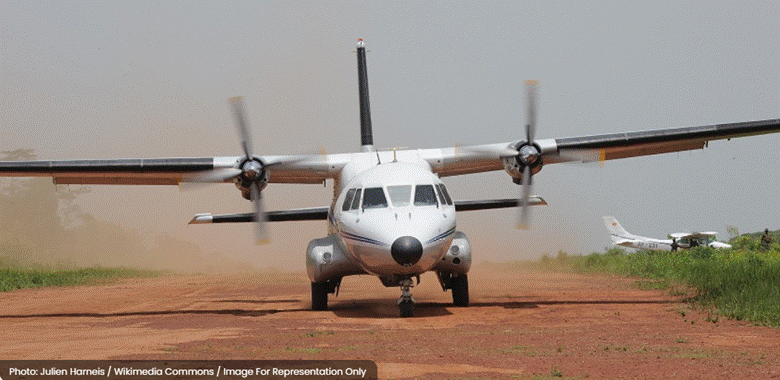
There are no roads between CAR’s capital, Bangui, and the town of Birao. The land route for goods used to come from the Nyala market in Sudan. But that market has been destroyed in the war that began in 2023.
I personally experienced the difficulty getting in and out of Birao that hot September day. I was scheduled to fly back to Bangui on a UN Humanitarian Air Service (UNHAS) flight. About halfway to the airport, the driver received a call and I heard him say “vol annulé.” Flight cancelled.
It had rained the day before, making the runway too muddy for the plane to land.
We turned around and headed back to the Birao hospital. There, I saw the tail end of a ribbon cutting ceremony, where the International Medical Corps presented the maternity ward with an ultrasound machine. Despite the condition of the runway that day, UNHAS had managed to get the machine to Birao on one of its once or twice weekly flights.
For people in Birao and the greater Vakaga region, United Nations air services are how they’re able to travel and access goods like that ultrasound machine. Local doctors told me that the region is entirely dependent on UNHAS for medical supplies and devices, medicine, and other life-saving goods. And these flights have decreased due to UN funding cuts.
When I was there, people were very worried they would cease altogether.
Imagine not being able to access health services due to the absence of infrastructure to move medical goods and supplies. As an American living in the year 2026, it’s actually unimaginable. But it is a reality for millions.
That’s why I was particularly interested to meet the founder and CEO of Anatra, Kevin King. These are precisely the kinds of problems that Anatra was created to address.
The Patient Playbook
King’s background is not what you’d expect from a dual-use technology[1] entrepreneur. Before founding Anatra in 2022, he spent years in manufacturing plumbing products.
“It was fascinating to learn the hard way and get the experience of how to earn revenue and be ethical,” King told me in December. “Over time, that’s the playbook. It’s not quick. You have to be patient.”
That patient, manufacturing-focused philosophy stands in sharp contrast to typical venture capital velocity. Where tech startups chase rapid scaling and quick exits, King’s approach centers on building sustainable revenue through ethical business practices, a playbook shaped by years in unglamorous industries where margins are thin and relationships matter.
When King and his team started exploring what could be done with large unmanned aerial vehicles (UAVs), the answers came quickly: delivering products, search and rescue, addressing middle-mile logistics gaps in places where roads, rails, or ports don’t exist or can’t be relied upon (like Birao).
The initial vision was explicitly humanitarian: An amphibious UAV that could “reach anywhere on the planet,” flexible enough for search and rescue missions or cargo delivery, and big enough to actually make a difference. In fact, the company’s tagline is “Anatra is on the way to help you.”
A pivotal point for the new company came when Russia invaded Ukraine in February 2022.
The invasion crystallized something for the team: contested logistics. It helped the company see that there was a huge need to be able to send aircraft into places that are dangerous for human pilots, where supply lines are vulnerable, and where traditional delivery methods fail because of conflict.
Today, Anatra is developing two aircraft models. The LC-500 is a runway-to-runway UAV capable of transporting 500 pounds over 500 miles, requiring just 1,000 feet of takeoff and landing distance. The AC-500 is amphibious, able to operate from land or water.

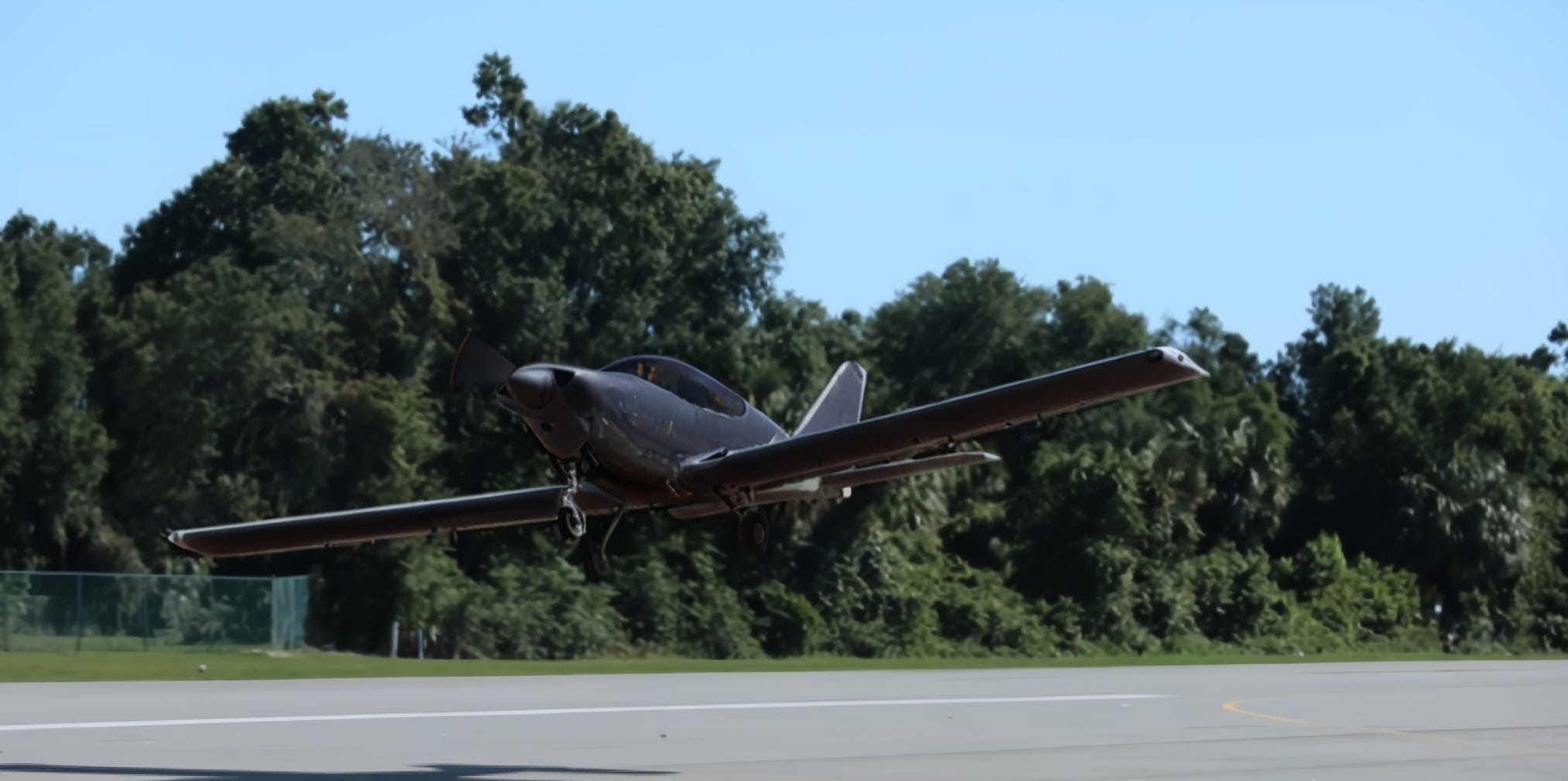
Both are fixed-wing designs and deliberately simple, using commercial off-the-shelf components where possible. “There’s a lot of commercial applied products in ours that can come to market right away,” King explained. “It’s fixed wing, simple aircraft that people are very used to, and they’re rugged.” This isn’t cutting-edge technology that might arrive after ten years of research and development. It’s proven designs, built to handle wind, choppy conditions, and rough environments.
The innovation, King argues, is in this simplicity and in driving down costs so “the whole world can access trade and commerce and logistics.”
Both aircraft are explicitly dual-use.
The Missing Middle Mile
To understand Anatra’s market position, you need to understand what King calls “the missing middle mile gap.”
Last-mile delivery—getting goods to individual consumers—has received venture capital attention. Amazon and numerous drone startups have poured resources into solving the final few miles of the supply chain. “There’s a lot of last mile companies and products, and I think that technology has [last-mile delivery] solved,” King said.
But the middle mile remains underserved. That’s the gap between major infrastructure—ports, airports, distribution centers—and remote destinations like Birao where roads, rail, sea, or airports don’t exist or can’t be relied upon. “There is always going to be a path for planes, trains, ships, and trucks,” King explained. Where middle mile infrastructure exists, it will remain. But where it doesn’t, in places like in CAR, autonomous cargo can leapfrog the gap entirely.
His vision is not to replace traditional logistics but to fill gaps where conventional methods are impossible or prohibitively expensive. Places where sending a crewed aircraft puts lives at risk. Places where a single road or runway can be a strategic vulnerability.
The economic logic is straightforward: autonomous cargo UAVs eliminate the most expensive component of aviation—the pilot—while maintaining payload capacity and range. For disaster relief organizations, these capabilities are attractive. For offshore platforms, remote mining operations, or island communities, they solve real logistical problems. For militaries operating in contested environments, they provide resupply options that don’t risk aircrew.
For people living in Birao, this technology would mean ongoing access to medications, medical supplies, and devices—regardless of the funding decisions of foreign assistance donors and despite the infrastructure deficit in CAR.
But King’s vision extends beyond addressing current infrastructure deficits. He sees Anatra’s aircraft as “connective tissue” for emerging technologies. New satellite communications. New power sources. Places that have never had electricity could leapfrog directly to sustainable or nuclear energy, and they’ll need logistics to support that infrastructure.
The runway-to-runway UAV is initially powered by aviation gasoline, with a modular propulsion architecture designed to transition seamlessly to hybrid or fully electric configurations as mission requirements and energy density mature. The amphibious UAV is hybrid-electric from inception, optimized for maritime operations, endurance, and flexible power management. It can seamlessly transition to fully electric configurations as mission requirements and energy density mature. “Our aircraft can come in and build off that,” King explained. The systems don’t require heavy upfront infrastructure, they’re designed to plug into whatever emerges.
That convergence of use cases—humanitarian, commercial, defense, infrastructure development—is precisely where the tension lives.
Peace Through Competition
King is direct about Anatra’s defense applications. In October 2024, he published an essay, Logistics Wins Wars. Drones Can Help, in which he argued that cargo UAVs represent a fundamental shift in how militaries can sustain themselves in contested environments. The piece described Anatra’s partnerships with Finland, a country acutely aware of the logistics challenges inherent in Arctic defense.
But King’s framing extends well beyond securing defense contracts. “If my aircraft is affordable, I can help connect people throughout the world,” he told me. “Opening more logistics and connecting more people is the growth I want. When everyone is tied together through commerce, it incentivizes peace” (Emphasis added).
The logic follows a familiar pattern in capitalist peace theory: economic interdependence creates incentives against conflict. Connect more people through trade and commerce, and you build networks that make war costlier.
The Hardware Problem
There’s another dimension to Anatra’s story that speaks to a broader challenge in the peace economy: most peace tech is software.
During our conversation, I mentioned that most founders in the peace tech community build software solutions. We talked about the common refrain amongst tech investors: “Hardware is hard.” And he acknowledged this reality, and the challenge it presents to raising capital for companies like his who are trying to build the hardware for peace economies. The leaders in peace tech investment don’t invest in companies like Anatra precisely because hardware requires more capital, longer timelines, more complex supply chains, and deeper expertise than software.
But in places like Birao, software alone doesn’t solve the problem, and I’d argue it’s not relevant given the current state of infrastructure there. You can’t download an ultrasound machine. You can’t live stream medical supplies. Internet connectivity itself—the foundation for most software solutions—is absent or unreliable across much of the fragile and conflict-affected world. And it relies on electricity, also absent. When I was in Birao, I had no internet access. The electricity access was via a generator, that had to be cycled off every few hours so it didn’t overheat.
This is what I think of as the hardware of peace: the physical infrastructure, the tangible systems that people can touch and that enable people to live, work, trade, and thrive. Autonomous cargo aircraft represent one answer to that hardware problem. They’re physical systems operating in physical space, moving actual goods to actual people. They don’t replace traditional infrastructure—King is clear about that—but they fill gaps where conventional approaches fail.
The question is whether that hardware genuinely serves peace, or whether it simply extends new capabilities into contested spaces.
The Dual-Use Dilemma
This is where the peace economy conversation becomes complicated.
Dual-use technology—innovations designed for both civilian and military applications—is not new. GPS, the internet, and satellite communications all emerged from military research and became foundational civilian technologies. But the directional flow matters. Technologies that move from military to civilian use follow a different ethical pathway than those explicitly designed from inception to serve both markets simultaneously.
Anatra falls into the latter category. The company’s website describes UAVs that “enable autonomous resupply in remote, contested, and infrastructure-denied environments.” Its value proposition explicitly includes “meet[ing] the military’s urgent need for affordable, attritable platforms that can operate inside enemy weapon zones.”
“Attritable” is a term of art in defense circles. It means platforms cheap enough that their loss is acceptable to commanders on the battlefield. In humanitarian logistics, that same characteristic translates differently: a vehicle inexpensive enough to deploy at scale, to places where traditional aircraft are too expensive to operate, or can’t operate due to lack of infrastructure or insecurity.
I asked King about the ethical considerations of building this dual-use technology. He acknowledged the tension between genuinely advancing peace versus using peace as marketing, or what might be called peace-washing. He brought his decision making framework for navigating these ethics back to his basic business ethos: “Making profit and revenue by doing the right thing.”
His mechanism for managing dual-use risks centers on three elements: relationships, monitoring, and the aircraft’s design itself. “For allies, we are part of the deterrence. Our aircraft is cargo, not a one-way mission.” Meaning that unlike strike drones or kamikaze systems, Anatra’s UAVs are designed to return and serve logistics functions rather than kinetic ones. The company maintains control through satellite-based surveillance and communications rather than onboard tracking software. This design choice reduces cyber exposure while enabling secure oversight. “It falls back to who can use the autonomous tech. We can track and affect who can use our technology.”
His advice to others navigating dual-use challenges gets to the heart of his approach: “Don’t get dragged down into how hard it is to be dual-use. Take a year and really learn defense. Then be patient. Don’t let go of the commercial market.”
The Infrastructure Paradox
There’s an interesting paradox in Anatra’s value proposition. The company’s commercial appeal rests on addressing infrastructure deficits in countries like CAR—precisely the places where governance is weakest, where regulatory oversight is most challenged, and where the line between legitimate commerce and conflict economies is blurred.
King’s vision of “a world where anyone or anyplace can receive the goods and services needed to survive and thrive” is compelling. The ultrasound machine that made it to Birao despite a dirt runway and infrequent UN flights is exactly the kind of impact autonomous cargo UAVs could enable at scale.
But the economics that make these systems viable—affordable, attritable platforms that can operate without extensive ground infrastructure—are the same economics that make them attractive for contested logistics. The company’s website notes that Anatra is “scaling U.S.-based manufacturing to outproduce adversaries.”
This is the tension that anyone working at the intersection of peace and profit must navigate. The same logistics resilience that supports humanitarian operations in crises can support military operations. The same technology that connects isolated communities to global commerce can extend the reach of military power into contested spaces.
King’s framing of “peace through deterrence” is one answer to this tension. It’s the premise that the presence of logistics capabilities, and the economic interdependence they enable, creates stability. Another answer, implicit in his comments about relationships and monitoring, is that governance of dual-use technology happens through partnership choices, contractual controls, and tracking systems.
Neither answer fully resolves the dilemma, which may be the point. Dual-use technology, almost by definition, resists clean ethical boundaries.
A Vision for Peace
Kevin King presents a particular vision of how technology, commerce, and security intersect in contested, underdeveloped, or emergency contexts. His background in manufacturing, his emphasis on the patient playbook and ethical profit, and his explicit commitment to serving both commercial and defense markets make Anatra a useful case study in the tensions that define much of the peace economy.
The remote regions that most need logistics innovation are often the places where governance is weakest and where the consequences of dual-use technology are hardest to predict or control. The economic logic that makes autonomous cargo UAVs viable—affordable, attritable, infrastructure-light—is the same logic that makes them attractive for nefarious operations.
King’s answer is essentially that peace and commerce are mutually reinforcing, that deterrence creates stability, and that the right manufacturing and partnership choices can navigate ethical complexity. It’s a framework grounded in American industrial tradition, in understanding that profit and ethical business practice can coexist, and in the belief that showing the world “what peace looks like” will outcompete the alternatives.
Whether that framework is sufficient for the contexts Anatra aims to serve—places like Birao, where state capacity is thin, where conflicts recur in cycles, and where external actors pursue competing interests—remains an open question.
What’s clear is that the infrastructure challenges in fragile and conflict-affected states are real. The humanitarian logistics gaps are real and growing. And the question of how to address them without creating new vulnerabilities is one that governments, businesses, investors, and peacebuilders will increasingly need to navigate.
Anatra represents one answer. Whether it’s the right answer may depend less on the technology itself than on the choices—about partnerships, governance, and accountability—its leadership makes that surround its deployment.
[1] Dual-use technology refers to tech that serves civilian and military purposes (learn more here: https://dualuse.mit.edu/defining-dual-use/). There are lots and lots of dual-use technologies, including AI, GPS, microchips, pharmaceuticals (that can treat disease and be used in bio or chemical weapons), etc. As my colleague Ola once said (specifically about AI), dual-use tech is like a fork: you can use it to eat, or you can use it to stab someone.
This is a very useful treatment of the dual-use question, but I wonder if framing the risk as primarily technological slightly obscures where the real safeguards sit.
A drone is a drone, much like food systems, water infrastructure, or communications networks in humanitarian settings. The object itself is not inherently risky. What matters is who controls it, under what institutional arrangements, and who ultimately benefits.
In humanitarian practice, dual-use risks are managed less through technical design choices and more through political, institutional, and governance safeguards: access control, accountability, legitimacy, and oversight.
From that perspective, the key peace challenge may be less about “dual-use technology” per se, and more about whether strong peace-intentional governance frameworks are in place to prevent capture, misuse, or exclusion, regardless of the hardware involved.
Thank you for this thoughtful piece and for the work you’re doing with The Peace Room. Your insights on how technologies and systems can contribute meaningfully to peacebuilding are both timely and important. I especially appreciated how you framed the role of practical tools and innovative approaches in supporting sustainable peace — it deepens the conversation beyond theory into real-world application. I’m grateful for the clarity and rigor you bring to these topics and look forward to the future.